



Sales Order Automation
Sales order processing automation has a positive impact on cashflow. Errors, out-of-stock items, and slow cash flow can hurt revenue performance over time. Companies investing in a sales order management system want to improve their cashflow and reduce the reliance on manual and paper processes.
Powered by AI
Sales Order Automation provides key benefits:
- Improved customer service
- Reduce processing time and order cycle time
- Reduced days outstanding
- Speeds up the invoice to cash process
- Overall – improved customer satisfaction!
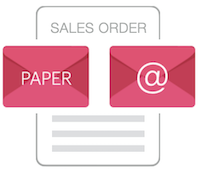
Sales Orders Arrive in Various Formats
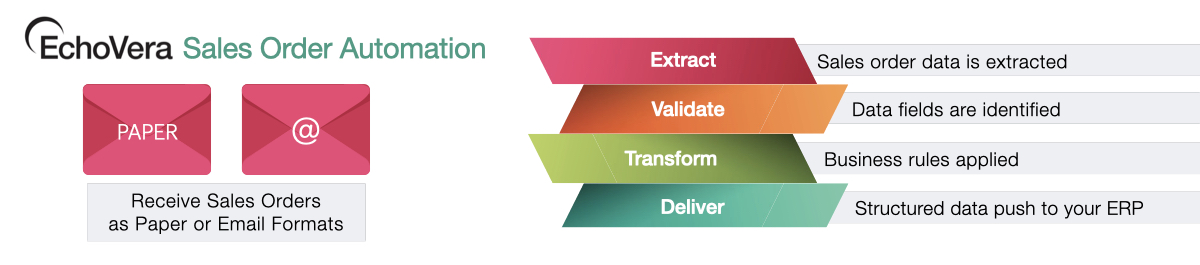
Sales orders arrive by email (or fax/mail). Sales orders are scanned and data fields mapped.
Extract Sales Order Data
Data is intuitively extracted from sales orders. Electronic files are captured with 100% accuracy.
Validate Sales Order Data
Data fields of the sales orders are identified and validated. The software intuitively picks up data from various sales order layouts.
Transform with Business Rules
Business rules and business process logic is applied to the sales order based on each unique customer.
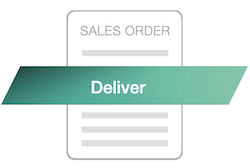
Deliver to Your ERP
Structured sales order data is delivered into your ERP. Seamless integration.
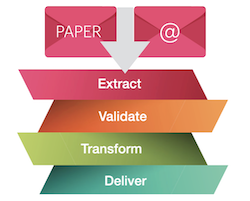
A Complete Sales Order Solution
Sales Order Automation eliminates manual processes and optimizes the sales order process.
Integration with your ERP or Accounting System
EchoVera’s Sales Order Automation is a cloud application that integrates with any ERP or accounting system without costly integration development.
For buyers, it’s important they are not impacted by the technology related to your sales order process. There’s no need for any software or software infrastructure for the buyers who are sending in their orders.
For sales order automation the addition of AI and LLMs increases the speed at which finance administrators can onboard new customers. Finance staff do not need to set up templates or rules for their documents, but instead ask the LLMs what is needed and the AI will do the rest. The EchoVera solution includes ChronoScan powered by OpenAI.
Sales Order Automation – Seamless Integration
with your ERP or Accounting System
EchoVera’s Sales Order Automation is a cloud application that integrates with any ERP or accounting system without costly integration development.
Outstanding Service & Support
…
Contact Us: Phone: +1 416 968-2335 (Canada)
E-mail: sales@echovera.com

EchoVera Inc. provides Intelligent OCR, Sales Order Automation and AP Automation to organizations looking to reduce costs and increase the efficiency of their financial operations. EchoVera brings over 30 years experience to clients worldwide.
Common FAQs
Sales order processing automation is the technology that uses AI and capture software to scan, validate, and deliver structured sales order data to the ERP. It takes sales orders that usually come in the form of email (or fax) and eliminates data entry; reducing the time to process sales orders by over 70%.
Order fulfillment automation refers to the use of technology to automate the tasks associated with order fulfillment, from confirming product availability to shipping products to customers. The goal of automating order processing is to reduce human error, increase efficiency, and free up employees to spend more time on more productive tasks. It takes sales orders that usually come in the form of email (or fax) and eliminates data entry; reducing the time to process sales orders by over 70%.
You use an automated order processing system that leverages AI and RPA technology to handle most of the manual areas of order intake through a centralized, cloud-based platform. To automate your sales order capture, you use Intelligent OCR and AI to extract the relevant data, validate the data, and send it in a structured format to the ERP, reducing the time to process sales orders by over 70%.
Automating order processing can bring multiple benefits to an organization, including increased customer satisfaction, faster cashflow and reducing friction in the sales cycle. According to Anthony Coundouris in his book Run Frictionless, reducing sales friction is essential for improving the customer experience and increasing sales performance. [3]
Several order fulfillment tasks can be automated, such as extracting order data, validating order data, and submitting structured order data to the ERP. It takes sales orders that usually come in the form of email (or fax) and eliminates data entry; reducing the time spent manually inputting sales order data by over 70%.
Order processing can be automated by using Order Automation that extracts data from the sales order, validates the data, and delivers structured data into the ERP. It reduces the time to process sales orders by over 70%.
Order to cash (OTC or O2C) is an essential function in finance; the entire cycle of events happens after a customer places an order until the customer pays for the order; that is, the order is converted to cash. [1]
Order to cash automation is the technology that uses AI and capture software to scan, validate, and deliver structured data to the ERP. It reduces the time to process sales orders by over 70%.
Sophisticated OCR systems can preserve the original layout of the sales order and produce an image of the document as well as fill data fields with extracted data. AI powered Intelligent OCR extracts the data, validates the data and delivers the data in a structured format to the ERP.
[1] Coundouris, Anthony. Run_frictionless: How to Free a Founder from a Sales Role. 2019.